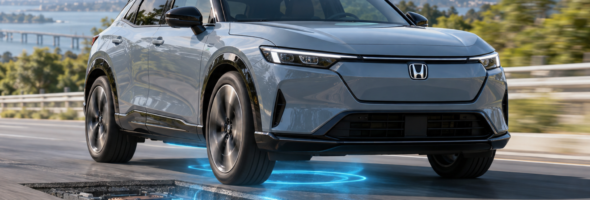
Electric cars are designed to use energy more efficiently than traditional vehicles. One important feature that helps with this is regenerative braking.
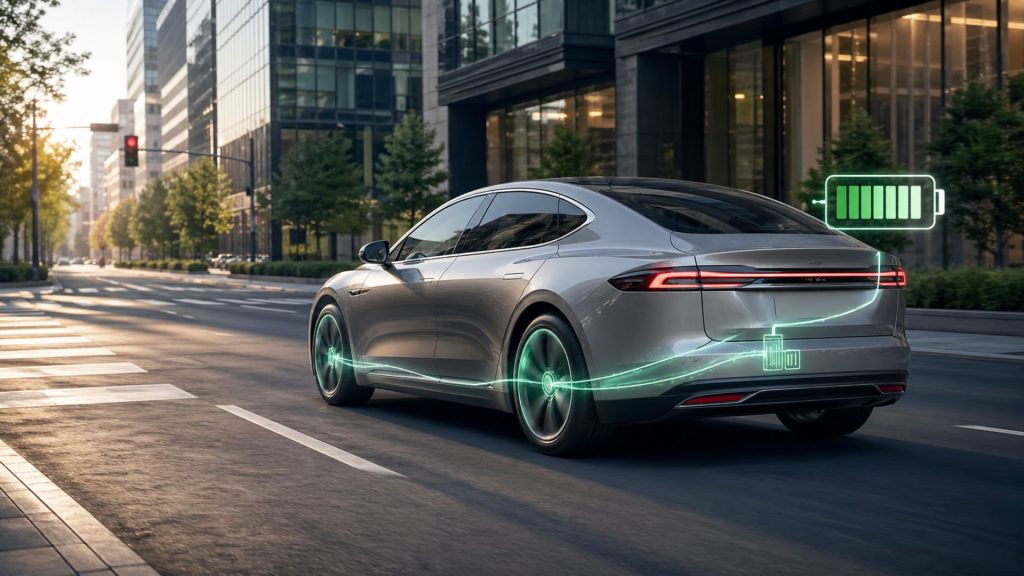
Instead of wasting all braking energy as heat, this system captures part of that energy and sends it back to the battery. The U.S. Department of Energy explains that the electric motor can work as a generator during braking, helping store recovered energy in the battery.
How Does Regenerative Braking Work?
In a normal car, pressing the brake pedal uses friction to slow the wheels. Much of that energy is lost as heat.
In an electric car, regenerative braking works differently. When the driver slows down, the electric motor reverses its role. It helps slow the vehicle and generates electricity at the same time.
That electricity is then sent back to the battery, where it can be used later.
Why Is It Useful for Electric Cars?
Regenerative braking can help improve efficiency, especially in city driving. This is because urban routes usually include frequent stops, traffic lights, and slower speeds. According to the Alternative Fuels Data Center, city driving can maximize the benefits of regenerative braking because of repeated stopping.
It may also reduce wear on traditional brake parts. Since the electric motor helps slow the car, the physical brakes may be used less often.
Does It Fully Replace Regular Brakes?
No. Regenerative braking does not completely replace normal brakes. Electric cars still need traditional friction brakes for quick stops, emergencies, low-speed braking, and situations where more stopping power is required.
However, both systems work together to make driving smoother and more efficient.
Final Thoughts
Regenerative braking is one of the features that makes electric cars smarter and more energy-efficient. It helps recover energy, supports battery range, and can reduce brake wear.
For drivers, it is a simple idea with a big benefit: every stop can help return some energy back to the car.