Choosing between a hybrid car and an electric car has become one of the biggest questions for drivers today. Both options are more efficient than traditional gasoline vehicles, but they work in different ways.
The best choice depends on your lifestyle, driving habits, budget, and access to charging stations. Before buying a new vehicle, it is important to understand how each option works.
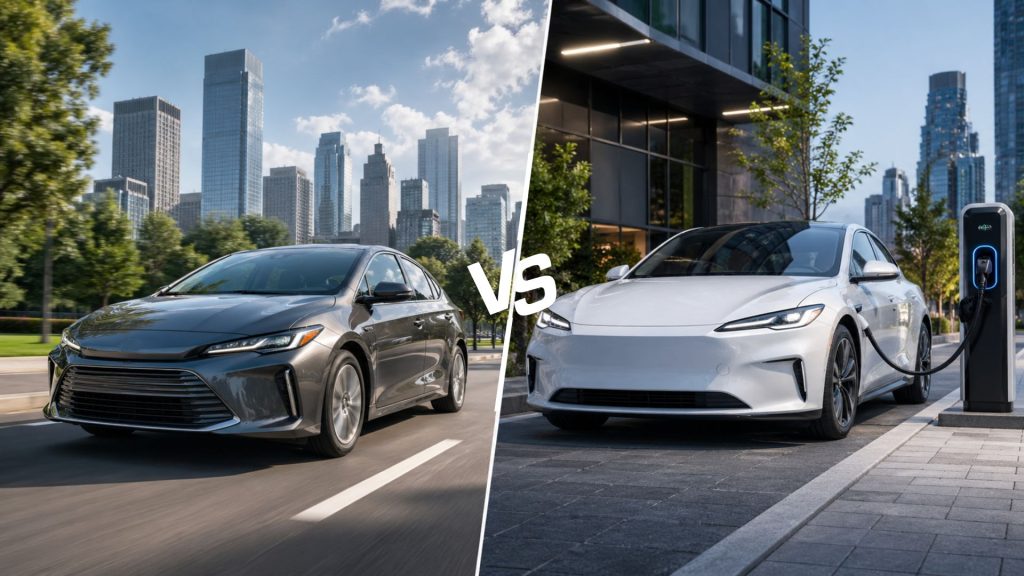
What Is a Hybrid Car?
A hybrid car combines a gasoline engine with an electric motor. This means the vehicle can use both fuel and electricity to move.
In many cases, the electric motor helps reduce fuel consumption during city driving. Meanwhile, the gasoline engine provides extra range for longer trips.
This makes hybrid cars a practical option for people who want better fuel efficiency without depending completely on charging stations.
What Is an Electric Car?
An electric car runs only on electricity. Instead of using a gasoline engine, it uses a battery and an electric motor.
Electric cars do not produce tailpipe emissions while driving. They are also known for being quiet, smooth, and fast when accelerating.
However, electric cars need to be charged regularly. For that reason, access to home charging or public charging stations is an important factor.
Main Differences Between Hybrid and Electric Cars
The biggest difference is how they get power. Hybrid cars use both gasoline and electricity. Electric cars use only electricity.
Hybrid cars usually have a longer total driving range because they can rely on fuel when the battery is low. On the other hand, electric cars can offer lower daily running costs if electricity is cheaper than gasoline in your area.
Maintenance can also be different. Electric cars have fewer moving parts, which may reduce some maintenance needs. However, battery health and charging habits are important.
Benefits of Hybrid Cars
Hybrid cars are a good choice for drivers who want efficiency but are not ready to go fully electric.
They are practical for long trips because drivers can refuel at regular gas stations. Also, they do not require a home charging setup in most cases.
For many people, hybrids feel like a smooth transition between traditional cars and electric vehicles.
Benefits of Electric Cars
Electric cars are attractive for drivers who want modern technology, lower emissions, and a quieter driving experience.
They can be especially convenient for people who drive mostly in the city and can charge at home. In addition, many electric cars include advanced features, modern interiors, and strong acceleration.
For daily commuting, an electric car can be a smart and comfortable option.
Which One Is Better for City Driving?
For city driving, both options can work well. However, electric cars often stand out because they are efficient in stop-and-go traffic and do not use gasoline.
Hybrid cars are also efficient in urban areas, especially because the electric motor helps reduce fuel use at lower speeds.
If you have easy access to charging, an electric car may be better for city life. If not, a hybrid may be more convenient.
Which One Is Better for Long Trips?
For long trips, hybrid cars may be easier for many drivers. They can be refueled quickly and do not require planning around charging stations.
Electric cars can also handle road trips, but the experience depends on charging infrastructure. Drivers may need to plan stops and check charger availability before traveling.
Which One Should You Buy?
A hybrid car may be better if you want fuel savings, flexibility, and fewer concerns about charging.
An electric car may be better if you have access to charging, drive mostly short or medium distances, and want a more modern, low-emission vehicle.
In the end, the best choice depends on how and where you drive.