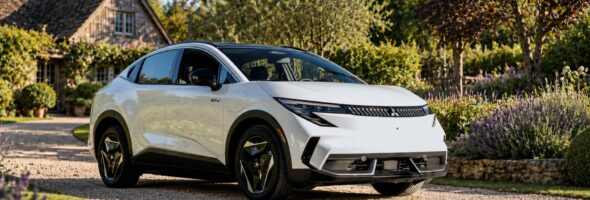
Toyota has unveiled its 2026 all-electric vehicle family, a lineup designed to make the switch to electric cars feel simple for everyday drivers. The announcement includes new pricing, updated specs, and a nationwide marketing campaign.
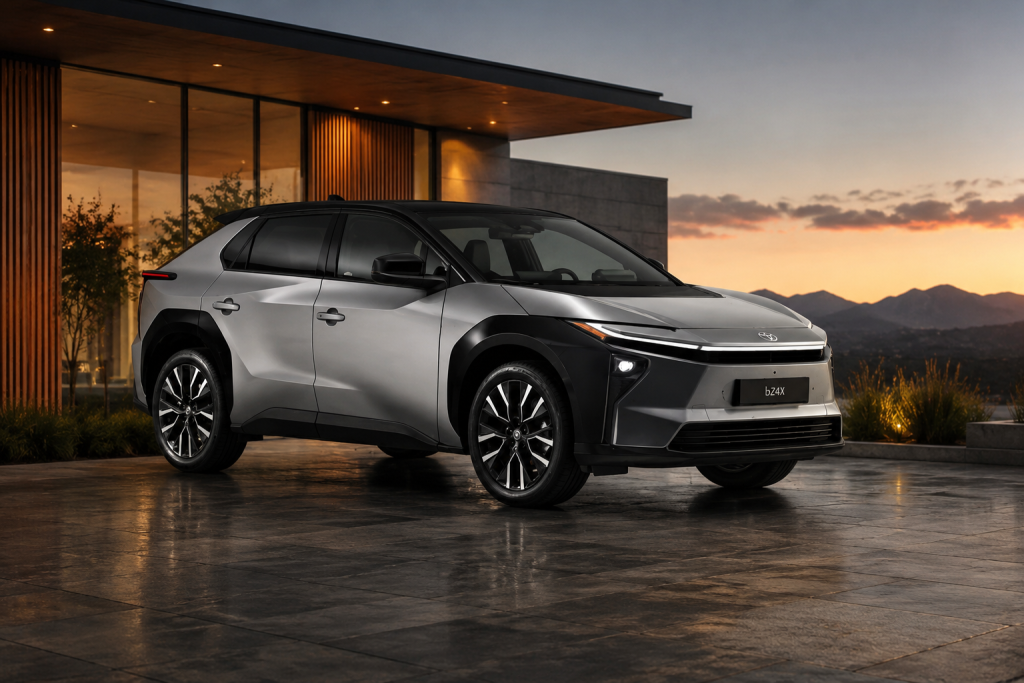
The push comes as the U.S. electric vehicle market goes through a turbulent stretch. Consumer adoption has slowed, government incentives have shrunk, and some automakers have delayed or canceled planned EV launches. Despite that backdrop, Toyota is moving forward with a broader electric strategy built around practicality rather than performance bragging rights.
What’s New in Toyota’s 2026 Lineup
The 2026 Toyota C-HR brings a coupe-inspired design to Toyota’s electric family, combining sportier styling with everyday usability. It comes in two trims: the C-HR SE, starting at $37,000, and the C-HR XSE, starting at $39,000, before fees.
The 2026 Toyota bZ Woodland focuses on a different kind of buyer. It targets drivers who want some off-road capability without sacrificing comfort. The Woodland starts at $45,300, while the Woodland Premium starts at $47,400.
Toyota’s broader bZ lineup also continues to improve, with the standard bZ now offering better range, faster charging, and stronger performance on all-wheel-drive models. The bZ XLE Plus, for example, can charge from 10 to 80 percent in under 28 minutes and offers an EPA-estimated range of 314 miles.
Why This Matters for Drivers
Toyota has been a cautious player in the EV space, often favoring hybrids over full battery-electric models. This new lineup signals a shift toward treating EVs as mainstream options rather than niche products for early adopters.
The marketing campaign behind the launch reinforces that approach. Rather than focusing on technology specs, Toyota’s ads highlight ordinary use cases, such as commuting, weekend trips, and small businesses running on electric power. The goal appears to be making EV ownership feel familiar instead of experimental.
For shoppers comparing options, the pricing puts Toyota’s new models in a competitive range against other compact electric SUVs and crossovers currently on the U.S. market.
What This Means for the Industry
Toyota’s expansion arrives at a moment when several automakers are reassessing their EV timelines. Some brands have pulled back due to softer demand, while others continue investing heavily in new electric platforms.
Toyota’s strategy suggests a middle path: steady, incremental electrification paired with hybrids, rather than an all-in transition. Whether that approach pays off will depend on how quickly U.S. drivers continue adopting electric vehicles through the rest of 2026.
As more automakers test different strategies this year, Toyota’s bet on practicality could become a useful benchmark for how mainstream brands approach the next phase of the EV transition.