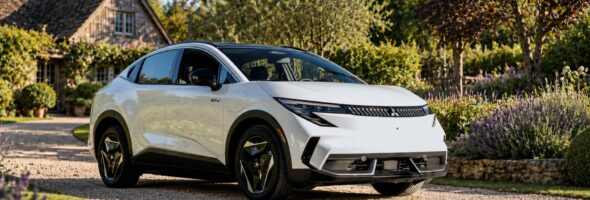
The original Toyota C-HR had a problem: it looked like a concept car but drove like a penalty. Bold wedge styling with nothing underneath to back it up. Toyota clearly heard the criticism, because the 2026 C-HR+ is a completely different machine — a fully electric SUV with 338 horsepower, standard all-wheel drive, and a 0-60 mph time of 4.9 seconds. On paper, it’s the most exciting Toyota EV you can buy. In reality, it’s more complicated than that.
A Completely Fresh Start
The 2026 C-HR is roughly six inches longer than the model it replaced, with much of that growth happening in the wheelbase. The result is a car that finally has interior space to match its exterior ambition. It returns with a standard dual-motor AWD powertrain producing 338 horsepower and a sprint to 60 mph in 4.9 seconds — a sporty edge its predecessor never had.
Importantly, the C-HR+ and the regular C-HR are two different vehicles. The C-HR is a small SUV available as a hybrid or plug-in hybrid. The C-HR+ is an all-new, all-electric SUV built on dedicated EV underpinnings shared with the Toyota bZ4X — and it’s bigger in every dimension. The name is borrowed for brand familiarity, but the car underneath is entirely its own thing.
Design: Still the Most Dramatic Toyota on the Road
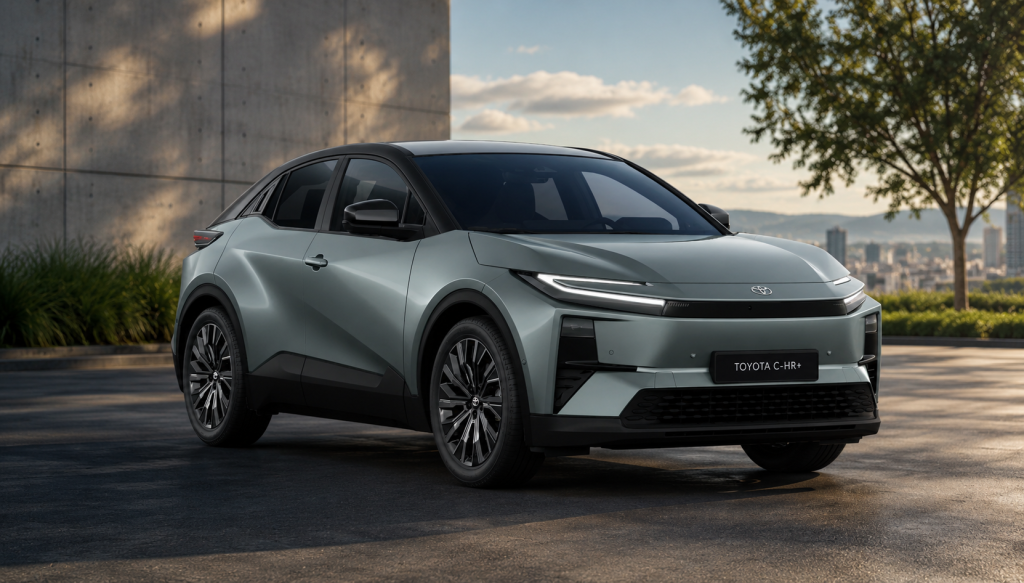
Toyota hasn’t softened the styling. The C-HR+ keeps its coupe-like silhouette, hidden rear door handles, and sharply sculpted bodywork. A body-colored band runs across the nose in place of a traditional grille, flanked by geometric air vents and linear LED headlight bars. Love it or not, it stands out in a segment that often plays things safe.
The interior follows through on that premium feeling. The cabin comes with a 7-inch digital gauge cluster, a 14-inch touchscreen, dual wireless chargers, leatherette upholstery, ambient lighting, paddle shifters for regenerative braking, Toyota Safety Sense 3.0, and heated front seats. The only real interior complaint — and it’s a legitimate one — is the gauge cluster position. Toyota places it unusually high on the dashboard, which can mean adjusting your seat to an awkward angle to see past the steering wheel.
Performance and Range: The Numbers Are Real
Both C-HR trims use the same dual-motor AWD powertrain and 74.7-kWh battery. The SE returns EPA estimates of 287 miles of range on its 18-inch wheels, while the XSE delivers 273 miles on larger 20-inch wheels. Those are competitive figures for the class.
DC fast charging tops out at 150 kW — not class-leading, but enough to take the battery from 10-80% in around 30 minutes. A NACS port and 11-kW onboard charger are standard across all trims.
On the road, the C-HR+ genuinely surprises. Along winding mountain roads, the C-HR feels spry and fun. It shares most of its chassis hardware with the bZ and bZ Woodland, but Toyota tuned the C-HR to be stiffer, giving it a sportier character. Ride quality is one of its strongest assets — even with the larger 20-inch wheels, this EV absorbs bumps well and would make for a very comfortable daily commuter.
Where It Falls Short
Two areas give pause. First, rear seat space. The C-HR can seat five at a pinch, but rear space is limited, and the sloping roof tends to restrict tall loads. For a family hauler it’s a stretch; for a couple or a solo commuter it’s more than adequate.
Second, the value equation gets tricky when you compare it to Toyota’s own lineup. A similarly loaded Toyota bZ costs around $47,300 — but it’s more practical and livable day to day. The C-HR+ asks you to give up some utility in exchange for style and a sportier personality, which is a fair trade for some buyers and a dealbreaker for others.
Trims and Pricing
In the US market, pricing kicks off at $38,450 for the SE trim. The XSE adds sueded seats, 20-inch wheels, a surround-view camera, lane-change and traffic-jam assist, and access to more options for $40,450. Fully loaded, the C-HR+ stays under $44,000.
In the UK, the C-HR+ starts from around £35,000 for the entry-level Icon trim, rising to £41,000 for the range-topping Excel. Two battery options are available: a 57.7 kWh pack offering up to 283 miles, and a larger 72 kWh unit delivering up to 378 miles.
Verdict: Style With Substance, Finally
The 2026 Toyota C-HR+ is the car the original should have been. It has real performance, real range, and a design that still turns heads without apologizing for it. It isn’t the most affordable electric crossover you can buy, but the combination of standard AWD, strong performance, usable range, and genuine design appeal makes it a confident entry into the segment.
That said, buyers who prioritize practicality over personality will find better value in the Toyota bZ. The C-HR+ is for drivers who want their EV to feel like a deliberate choice, not just a sensible one.