Something historic happened at the start of 2026. For the first time, a Chinese automaker had officially become the world’s biggest seller of battery electric vehicles — surpassing the company that once defined the entire category.
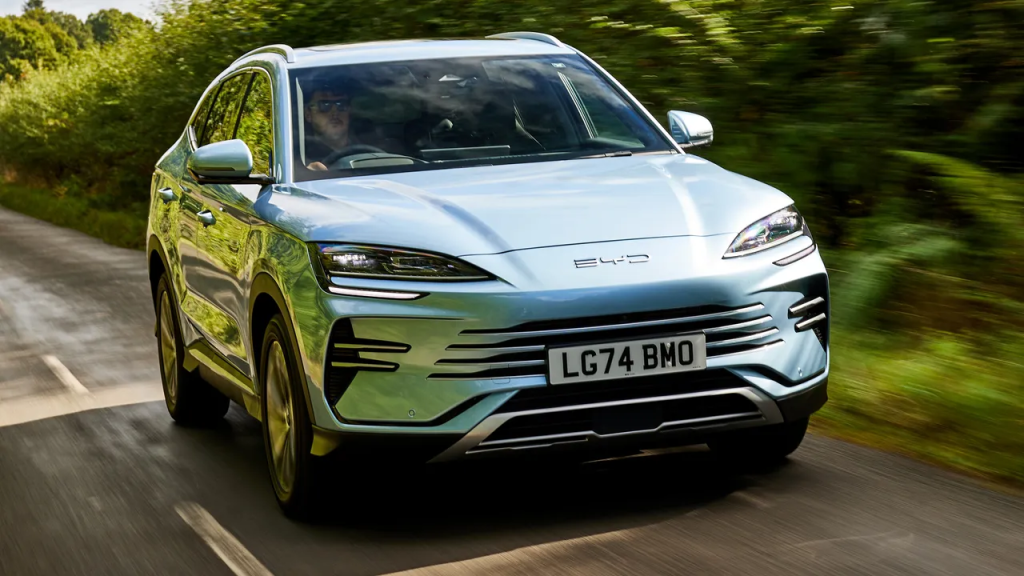
BYD, whose name stands for Build Your Dream, closed out 2025 with approximately 2.26 million battery electric vehicles delivered worldwide. That figure represented a nearly 28% year-over-year increase for the Chinese brand. Tesla, by contrast, reported around 1.64 million deliveries over the same period — a drop of roughly 9% compared to 2024. The gap between the two companies was not small. BYD outsold Tesla by more than 600,000 units in pure electric vehicles alone.
This milestone had been building for years, but the speed at which it arrived surprised many in the automotive industry. A little over a decade ago, Tesla CEO Elon Musk famously dismissed BYD’s prospects during a 2011 television interview, suggesting the Chinese brand had little chance of becoming a serious competitor. The 2025 figures told a very different story.
How BYD Got Here
BYD’s rise was not the result of one decision or one product. The company built its advantage across several fronts simultaneously. Its lineup today spans compact city cars, crossover SUVs, premium sedans, and plug-in hybrid options — giving buyers far more variety than Tesla currently offers. On top of its roughly 2.26 million pure electric vehicles, BYD delivered approximately 2.29 million plug-in hybrid vehicles in 2025, a segment where Tesla does not compete at all. Combined, those numbers brought BYD’s total 2025 vehicle sales to around 4.5 million units.
The brand also made significant inroads in Europe, a market once considered firmly in Tesla’s column. In May 2025, BYD registered more battery electric vehicles in Europe than Tesla for the first time ever — 7,231 units compared to Tesla’s 7,165, according to available registration data. This happened despite European Union tariffs on Chinese-made electric cars, which were introduced following an anti-subsidy investigation by the European Commission. BYD has responded to those trade barriers in part by expanding its manufacturing footprint, with new or planned facilities in Thailand, Brazil, Hungary, and other markets.
What Was Happening at Tesla
Tesla’s 2025 was complicated by several factors that went beyond product. The expiration of a $7,500 federal tax credit for EV buyers in the United States removed a meaningful purchase incentive. Intense competition from BYD and other manufacturers also weighed on sales. Additionally, some analysts and consumer surveys pointed to reputational headwinds tied to Musk’s high-profile political activities. Despite all of this, Tesla shares rose roughly 11% over the course of 2025.
Looking ahead, Tesla’s stated strategy is shifting focus. The company has been developing a robotaxi called the Cybercab, a two-seat autonomous vehicle designed to operate without a steering wheel or pedals. Production was expected to begin in early 2026, though the vehicle still requires regulatory approval for fully unsupervised operation. Tesla appears less focused on volume car sales and more interested in building toward an autonomous future — a bet that carries both enormous potential and considerable uncertainty.
The rivalry between the two companies continued into early 2026. In the first quarter, Tesla rebounded with approximately 358,000 deliveries — edging ahead of BYD’s roughly 310,000 pure EV deliveries during the same three months. The back-and-forth underscores how dynamic this competition remains.
What This Means for Drivers
For consumers, the BYD-Tesla rivalry is ultimately good news. Competition at this level tends to push prices down and quality up. BYD’s growing global presence means more buyers outside China will have access to a broader range of electric options — many at price points below what Tesla currently offers. The global EV market itself is expanding rapidly, with more than 20 million electric cars sold worldwide in 2025 alone. Nearly 1,000 electric models were available globally by the end of that year, up from about 35% of all car models in 2024 to roughly 40%.
The story of BYD overtaking Tesla is not simply about one company winning and another losing. It signals that electric vehicle technology has matured enough for multiple strong players to compete on equal footing. For drivers, that competition is only getting started.