Buying an espresso machine can quickly become more complicated than expected. At first, the idea seems simple: choose a machine, add coffee, and start making espresso at home. Then come the specifications—pressure levels, grinders, boilers, milk systems, temperature controls, price differences and dozens of features that are not always easy to compare. Some models are relatively affordable, while others can cost several times more depending on the technology, materials and level of automation.
This article is provided strictly for general informational purposes concerning espresso machines in the United States and does not constitute a commercial offer, financial advice, or legal counsel. Costs, requirements, terms, and obligations vary by provider and must be verified within individual contractual documentation.
The best approach is to forget the specification sheet for a moment and think about how you actually drink coffee.
If you mainly enjoy a single espresso in the morning, your needs are very different from someone who prepares cappuccinos or lattes every day. Straight espresso drinkers should pay more attention to temperature stability, grind quality and extraction control. For milk-based drinks, the steam wand and the machine’s ability to recover heat quickly become much more important.
Choose the right level of control
Espresso machines generally fall into three broad categories: manual, semi-automatic and fully automatic.
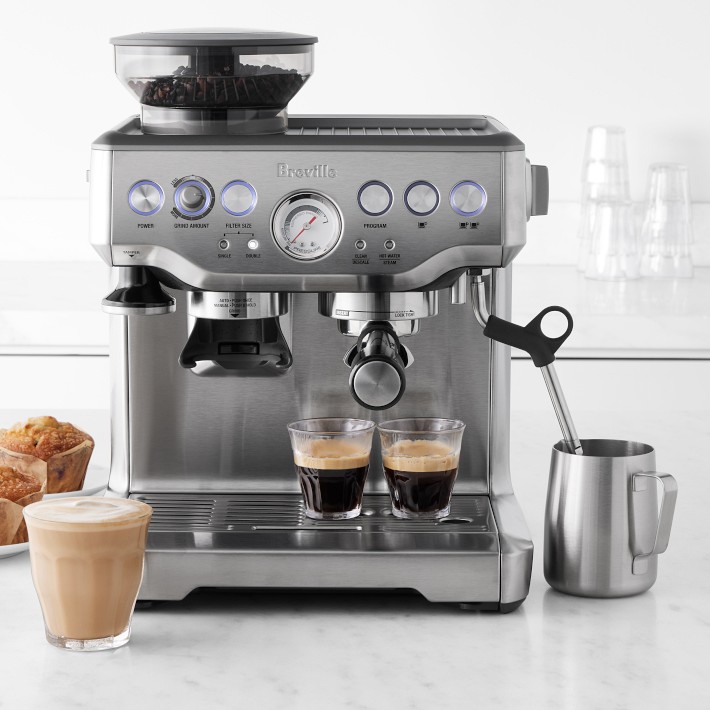
Semi-automatic machines are a popular middle ground. You grind the coffee, prepare the portafilter and control the extraction, while the machine provides the pressure needed to brew. They offer enough control to improve your technique without making every cup unnecessarily complicated.
Fully automatic machines are built around convenience. Many can grind the beans, measure the dose and prepare a drink with the press of a button. They are especially practical in households where several people use the machine and not everyone wants to learn the details of espresso preparation.
Manual machines offer much more control but require patience and practice. They are generally best suited to people who enjoy coffee preparation as much as the finished drink.
Pay attention to the grinder
The grinder is one of the most important parts of a home espresso setup, yet it is often treated as an afterthought.
Espresso requires a fine, consistent grind. Even small changes in grind size can affect how quickly water passes through the coffee and how the final shot tastes.
Machines with built-in grinders are convenient and can save counter space. A separate burr grinder, however, usually gives you more flexibility and can be upgraded independently later.
Think about payment options as part of the purchase
A better espresso machine can represent a significant upfront expense, particularly when a grinder and accessories are included. For that reason, some buyers also compare financing arrangements, installment plans or options marketed as Pay Monthly Espresso Machine No Deposit.
These plans can make the initial purchase easier to manage, but the monthly payment should not be the only number you consider. Check whether interest is charged, how long the agreement lasts, whether there are late fees and what the total repayment amount will be. In some cases, a smaller monthly payment can result in a considerably higher overall cost.
Whenever possible, compare the financed total with the machine’s normal retail price before deciding.
Do not get distracted by pressure numbers
Many espresso machines advertise 15 or even 20 bars of pump pressure. The figure sounds impressive, but it does not necessarily mean better espresso.
Traditional espresso is generally brewed at around nine bars of pressure. What matters more in everyday use is how consistently the machine controls temperature and pressure during extraction.
A reliable heating system, good-quality portafilter and stable brewing temperature are often more valuable than an unusually high pressure rating.
Consider cleaning and everyday use
An espresso machine becomes part of your daily routine, so convenience matters.
Portafilters need to be emptied and rinsed, steam wands should be cleaned after use, and machines require periodic descaling. Fully automatic machines may handle some cleaning tasks internally, although they also have more components that need regular maintenance.
Before buying, check how easy the water tank is to remove, whether replacement filters are readily available and how much space the machine needs on your counter.
It is also worth measuring the area carefully. Some machines need additional clearance above them to refill a bean hopper or remove a water tank.
Buy for your routine, not the specification sheet
The best espresso machine is not necessarily the most expensive one.
A beginner may get excellent results from a simple semi-automatic machine paired with a good grinder. Someone who prioritizes convenience may be much happier with a fully automatic model, even if it offers less control.
The right machine is ultimately the one that fits naturally into your routine, your kitchen and your budget. Focus on the coffee you actually drink, choose a grinder capable of producing consistent results and avoid paying extra for features you are unlikely to use.
A machine that you enjoy using every morning will usually be a better investment than a more sophisticated one that ends up sitting unused on the counter.ake better coffee for you than a more impressive one that spends most of its time sitting unused on the counter.s, warranty coverage, return procedures, and payment dates apply to the specific purchase.