Engineers at the University of Hong Kong have developed a new cryogenic chip designed to address one of quantum computing’s biggest scaling challenges. The research was detailed in a study published in Nature Communications.
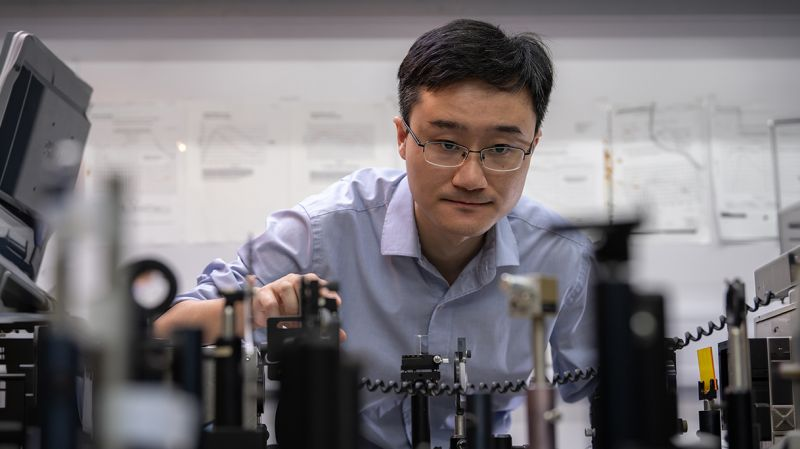
The chip is built using standard silicon carbide power transistors and is capable of operating at extremely low temperatures, around 10 millikelvin, just above absolute zero.
What Makes This Chip Different
According to the research team, the chip uses a process called electron-donor impact ionization to mimic neural “spiking,” a behavior inspired by how neurons communicate in biological systems. This approach is described as an energy-efficient way to manage signals within extremely cold quantum computing environments.
One of the central problems in scaling up quantum computers is what researchers refer to as a wiring bottleneck. As quantum systems grow larger, they require increasingly complex wiring to connect and control individual qubits, and managing that complexity becomes harder as systems scale. The new chip is designed to help address this challenge directly.
Notably, the chip is built using standard semiconductor manufacturing processes already used in the broader chip industry, rather than requiring entirely new fabrication methods. Researchers also highlighted that the chip’s design makes it robust enough for extreme environments, including potential deep-space applications.
Why This Matters for Quantum Computing
Wiring complexity has long been considered one of the practical barriers preventing quantum computers from scaling beyond a few hundred or a few thousand qubits. A chip that can help manage this complexity using familiar manufacturing techniques could lower the cost and difficulty of building larger quantum systems.
Because the chip is compatible with existing semiconductor manufacturing infrastructure, it may also be easier for the broader industry to adopt, compared to solutions that require entirely new production methods.
What This Means for the Technology Industry
For companies and research institutions working on quantum hardware, a more practical approach to wiring and signal management could accelerate progress toward systems with significantly more qubits. This, in turn, could move quantum computing closer to solving problems that are currently out of reach for classical computers.
The research also reinforces Hong Kong’s growing role in advanced semiconductor and quantum-related research, an area where competition among research institutions and countries continues to intensify.
What Could Happen Next
As with most early-stage quantum hardware research, further testing and validation will be needed before this chip design sees wider adoption. Researchers have not yet detailed when or whether this technology might be integrated into commercial quantum computing systems.
For now, the development adds to a growing body of research aimed at solving the practical engineering challenges standing between today’s quantum computers and the much larger systems scientists hope to build in the future.