Tata Motors is preparing an important move in the electric vehicle market. The Indian automaker plans to use Chery technology to develop its new premium EV line under the Avinya brand.
The decision is notable because it connects one of India’s most important carmakers with one of China’s fast-growing automotive technology groups. It also shows how traditional manufacturers are looking for faster ways to compete in the increasingly demanding EV market.
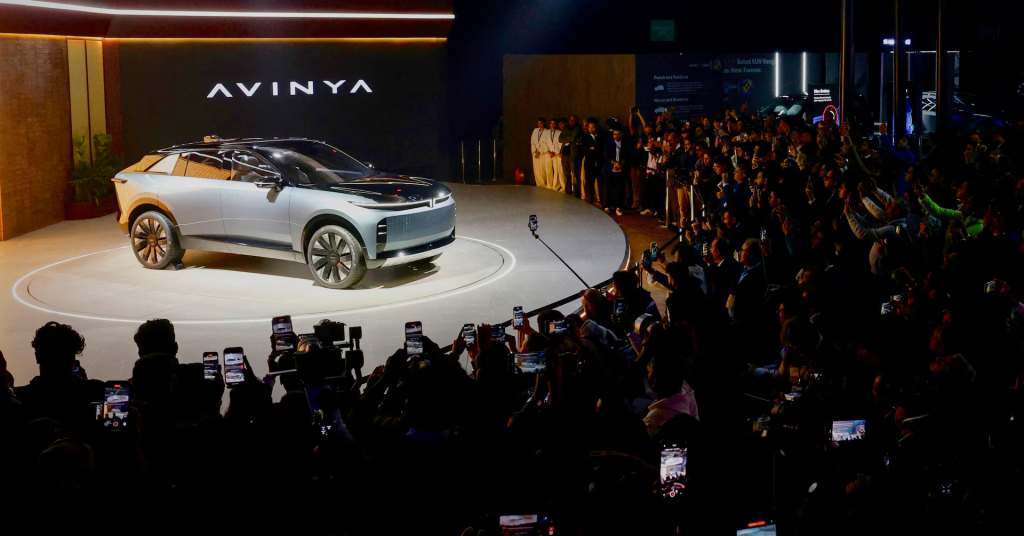
Avinya, Tata’s Premium Electric Bet
Avinya is the project Tata Motors wants to use to enter the premium electric vehicle segment more aggressively. The brand was introduced as a more advanced, modern and technology-focused part of Tata’s electric strategy.
The goal is to go beyond affordable EVs. Tata wants to create vehicles with stronger design, more technology, better comfort and a more premium user experience.
However, developing a new electric platform from scratch can take a long time. That is why Tata is reportedly turning to an existing architecture to speed up its plans.
Why Chery Technology Matters
Tata is expected to use a Chery-linked platform to build future Avinya electric vehicles. This technology could help reduce development time and bring new models to market faster.
The platform is connected to the Chery and Jaguar Land Rover ecosystem in China. This is relevant because Tata Motors also owns Jaguar Land Rover, a brand with strong experience in the premium vehicle segment.
Instead of starting from zero, Tata could use a technical base that is already developed. This would allow the company to focus more on design, software, local adaptation and the overall user experience.
The First Model Could Arrive in 2027
Reports indicate that Tata plans to launch at least two premium electric vehicles under Avinya. The first model could arrive in 2027, while a second vehicle may follow in 2029.
These vehicles are expected to be assembled in India, at a plant in Tamil Nadu. This strategy would allow Tata to keep production local while using technology that helps accelerate the development of the new EV line.
That point is important for India, a market where electric vehicles are growing and competition is becoming stronger every year.
Why Tata Is Seeking Technology Support
Tata Motors is already one of the leaders in India’s electric car market. However, the premium segment requires a higher level of development.
Buyers of more expensive EVs usually expect longer range, better performance, more advanced interiors, stronger software and a more refined driving experience.
To compete at that level, a strong platform is essential. Using Chery technology could help Tata recover time and reach the market sooner with a more competitive product.
Chery Gains More Global Influence
The possible collaboration also shows Chery’s growing role in the global auto industry. The Chinese company has become one of the most active automakers in terms of international expansion and electric vehicle technology.
Chery does not only sell vehicles under its own brands. It also works with different partners and platforms to enter new markets.
In this case, its technology could become the base for Tata’s premium EV line. That reinforces a clear trend: Chinese automotive technology has become highly competitive in the electric vehicle race.
A Strong Signal for India’s EV Market
India is one of the world’s largest automotive markets. The country is also trying to accelerate electric mobility, although it still faces challenges such as charging infrastructure, pricing and model availability.
Tata’s decision could have an important impact because it shows that local brands are willing to use global technology partnerships to compete more effectively.
At the same time, it may help Tata defend its leadership against rivals that are also expanding in the EV market, including Mahindra and other manufacturers with international support.
What It Could Mean for Buyers
For consumers, this strategy could lead to more advanced and better-equipped electric vehicles. If Tata adapts the platform successfully, Avinya could offer a strong mix of premium design, modern technology and local production.
It could also help bring higher-end electric vehicles to the Indian market at more competitive prices than some imported alternatives.
Even so, success will depend on several factors. Tata will need to prove that Avinya can deliver strong range, fast charging, interior quality, safety and a convincing technology experience.
A New Stage for Tata in Electric Vehicles
Using Chery technology marks a new stage for Tata Motors. The company does not only want to sell accessible electric cars; it also wants to compete at a higher level.
Avinya will be an important test for that vision. If the strategy works, Tata could strengthen its position in India’s premium EV segment and eventually prepare for opportunities in other markets.
The move also confirms a broader reality in the auto industry: in the race for electric vehicles, technology partnerships can be just as important as design, branding or price.